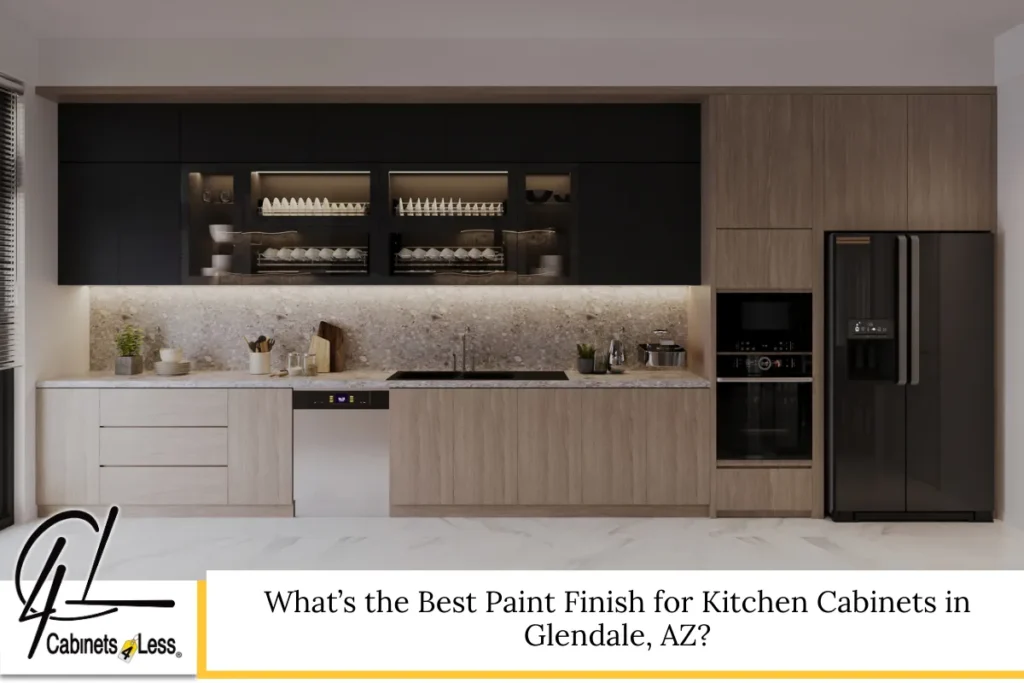
Kitchen cabinets account for a large share of any remodel budget, and choosing the right door material can save thousands of dollars or create headaches down the road. If you have been searching for an affordable option that delivers a clean, modern look, thermofoil is probably on your radar. But what is it, exactly? Thermofoil is a thin vinyl layer that gets heated and vacuum-pressed over medium-density fiberboard (MDF) cabinet doors and drawer fronts. It is a type of finish, not a plastic cabinet box. The core underneath is engineered wood. Many Glendale homeowners consider thermofoil because of its smooth surface, uniform style, and attractive pricing compared with painted wood. The sections below cover how it holds up in the dry Arizona climate, where to place it in your home, and how it stacks up against other materials.
Key Takeaways
- Thermofoil cabinets use a vinyl surface heat-bonded over MDF doors to create a smooth, paint-like or wood-look finish at a lower price than solid wood cabinetry.
- Main advantages include budget-friendly pricing ($60 to $200 per linear foot), easy cleaning, and a consistent appearance across all units; they work well in secondary spaces like a laundry room or guest bath.
- Main drawbacks include heat sensitivity near ovens and cooktops, limited repair options once the vinyl layer peels or bubbles, and the inability to sand and refinish like wood cabinet doors.
- Glendale homeowners should pay close attention to appliance placement, ventilation, and sun exposure when choosing thermofoil for any room in the home.
What Thermofoil Cabinets Are Made Of
Rigid thermofoil, sometimes called RTF or 3D laminate in the industry, refers to a specific manufacturing process for cabinet doors and drawer fronts. The process combines an engineered wood core with a heated vinyl skin to produce a finished product in a single step; no priming, sanding, or multi-coat painting is required.
The MDF Core
Medium-density fiberboard is made from wood fibers bonded under heat and pressure with resin. The result is a dense, uniform board that machines cleanly and holds routed profiles without splintering. MDF has no visible grain, knots, or natural defects, which makes it a predictable substrate for thermofoil application.
The Vinyl Surface
A colored vinyl film, typically PVC, is bonded to the MDF using adhesive, heat, and vacuum pressure. The film wraps around the face and edges of each door in a single pass. The vacuum-press process creates a seamless and non-porous surface with no exposed edge bands or joints. Most thermofoil doors use rounded or softly curved edge profiles to reduce stress on the film at corners.
Colors, Styles, and Safety
Thermofoil is available in solid colors and faux wood grains. Popular options include flat whites, soft grays, cream tones, and printed patterns that imitate oak, maple, or walnut. Common styles of thermofoil include modern flat-panel and Shaker-style doors. Because most thermofoil cabinet doors are one-piece construction rather than five-piece frame-and-panel assemblies, the finished look is smooth and uniform. Modern thermofoil products are expected to meet current formaldehyde emissions and safety standards applicable in Glendale, AZ.
How Thermofoil Performs in Everyday Glendale Homes
Thermofoil cabinets typically last 10 to 20 years when used in appropriate locations and cared for properly. That range depends on several factors: proximity to heat, moisture exposure, quality of the original build, and how consistently the homeowner follows basic maintenance.
Daily Durability
For daily use, thermofoil holds up well against the kind of wear a busy household dishes out. The vinyl surface of thermofoil cabinets resists moisture, sheds fingerprints, and tolerates light scuffs without showing damage. Thermofoil cabinets resist moisture and are easy to clean, which matters in a home where kids, pets, and cooking happen at the same time. Minor surface scratches, however, can expose the MDF underneath. Once water reaches bare MDF, the board swells and deteriorates.
Moisture and Sealed Edges
The sealed vinyl layer handles everyday splashes without issue. Problems begin when water gets underneath through a damaged corner, a lifted seam, or an unnoticed leak under the sink. The MDF core absorbs moisture faster than solid wood, so catching damage early is important.
Glendale’s Climate and Interior Heat
Glendale’s dry air, averaging about 7.7 inches of rainfall per year, is generally favorable for MDF because ambient humidity stays low most of the year. The real concern is heat. Summer highs in Glendale range from 100 to 106 degrees Fahrenheit, and interior surfaces near southwest-facing windows absorb radiant energy through glass. Direct sunlight can cause white thermofoil to yellow over time. Combine that with heat from appliances, and the vinyl layer faces compounding stress.
Quality of cabinet installation affects thermofoil’s durability and performance as well. Doors that are not properly aligned, or boxes that sit flush against heat sources without required clearances, tend to fail sooner.
Where Thermofoil Lasts Longest
Thermofoil tends to deliver its full life span in areas away from concentrated heat: pantry runs, guest bathrooms, tall storage units, and cabinet sections on the opposite wall from ovens and cooktops. Cabinet boxes are often standard plywood or particleboard with only the visible faces wrapped in thermofoil, which is a detail worth knowing when future repairs come up.
Why Homeowners Choose Thermofoil Cabinetry
Many Glendale homeowners put thermofoil on their shortlist during a remodel because of cost, appearance, and low maintenance. Here is what draws people to this material.
- Affordability. Thermofoil cabinets are often budget-friendly, costing $60 to $200 per linear foot. Thermofoil cabinets cost less than solid wood options, which helps keep total project pricing in check whether you are updating a full kitchen or a single bath. Thermofoil cabinets offer a budget-friendly option for remodels of any size.
- Easy cleaning. Thermofoil cabinets have a smooth, joint-free surface for easy cleaning. There is no open wood grain to trap grease or dust, and a quick wipe with mild soap removes most kitchen splatter.
- Consistent style. Thermofoil cabinets provide a consistent look across all units, making them a natural fit for modern, minimalist, or bright white design schemes where uniformity matters.
- Versatile locations. Thermofoil works well in bathrooms, a laundry room, rental units, guest suites, and multifamily properties where fast turnover and low-maintenance finishes make life easier for owners and property managers.
Thermofoil also pairs well with a wide range of countertop materials, hardware finishes, and flooring choices. Homeowners who want to build a nice kitchen on a budget often spend more on stone counters or a tile backsplash while saving on cabinet doors.
Drawbacks and Limitations of Thermofoil Cabinets
Understanding the drawbacks helps set realistic expectations before ordering doors or fronts. No material is perfect, and thermofoil has clear weak points that Glendale buyers should weigh carefully.
- Heat sensitivity. Thermofoil can struggle with heat near stoves, ovens, and other heat sources. Thermofoil is sensitive to extreme heat; high temperatures can cause delamination of the vinyl from the MDF substrate. Heat can cause thermofoil surfaces to warp or peel, especially on doors directly above a range or beside a wall oven without proper clearance.
- Repair difficulty. Thermofoil has limited repair options; extensively damaged panels typically need replacement. Once the film lifts or bubbles, a spot fix is rarely invisible. Minor edge lifts caught early can sometimes be re-glued, but the results are not always durable.
- Finish permanence. Thermofoil cabinets cannot be refinished once installed. Unlike wood or painted MDF, you cannot sand, prime, and repaint thermofoil doors to change their color or refresh their look. Updating the style means ordering new fronts.
- Perception and resale. Some buyers prefer the tactile weight and character of real wood. In certain Glendale neighborhoods where visible craftsmanship carries value, thermofoil may be seen as a budget choice, which can influence how a home shows during a sale. Condition matters: unblemished thermofoil reads as polished, but peeling or yellowed fronts reduce perceived quality fast.
- Lifetime cost risk. The initial cost of thermofoil cabinets may lead to higher lifetime costs if replacements are needed sooner than expected, especially in high-heat zones.
Discuss these trade-offs with a cabinet shop or designer before finalizing layouts near major heat or steam sources. A few layout adjustments can extend the life of thermofoil by years.
Best Places to Use Thermofoil in Your Glendale Home
Where you place thermofoil in your home often matters as much as which color or door style you choose. Strategic placement protects the material from its known weaknesses and lets it perform at its best.
- Kitchen placement. Use thermofoil on cabinet runs away from cooktops, ovens, and appliances that vent hot steam. Install metal heat shields where manufacturer guidelines call for them. Thermofoil cabinets require good ventilation in kitchens to minimize heat exposure, so a properly ducted range hood is not optional; it is essential.
- Bathrooms. Powder rooms and standard baths are strong candidates. The vinyl surface handles the humidity of a bathroom well, and the smooth finish allows quick wipe-down maintenance between uses.
- Laundry room. Laundry cabinetry benefits from thermofoil’s moisture resistance, simple cleaning, and budget-friendly pricing. A crisp white or gray finish keeps the space looking organized without a large investment.
- Secondary spaces. Home offices, mudrooms, and rental unit kitchens often use thermofoil for its combination of consistent style and value. These rooms see less heat and steam than a primary kitchen, which extends thermofoil’s useful life.
- Areas to avoid. Do not use thermofoil directly above unvented ranges, directly beside wall ovens without required clearances, or on outdoor-adjacent cabinets with strong sun exposure through glass. Thermofoil is not suitable for outdoor kitchens due to heat exposure. An island positioned far from cooking zones, on the other hand, can be a good fit.
Thermofoil vs Other Popular Cabinet Materials
Comparing thermofoil with solid wood, painted MDF, and laminate helps Glendale homeowners choose the right mix for each room. No single material wins in every category.
Thermofoil vs Solid Wood
Solid wood species like maple and cherry offer rich texture, visible grain, and the ability to sand and refinish multiple times over a decades-long life. That flexibility comes at a cost. Thermofoil is cheaper than solid wood by 20% to 40%, which frees up budget for other areas of the project. Wood also carries more weight per door, and its finishes darken or shift in tone naturally over the years.
Thermofoil vs Painted MDF
Both share the same MDF core. The difference is the finish: painted MDF uses a primer and multi-coat paint system that can be touched up, repaired, or repainted later. Painted MDF cabinets usually cost more than thermofoil because of the labor involved in spraying and curing multiple coats. Painted finishes also tolerate higher heat than vinyl film, making them a stronger choice next to ovens.
Thermofoil vs Laminate
Laminate typically applies flat sheets of resin-impregnated paper to slab-style doors. Thermofoil’s vacuum-press method can wrap routed profiles and decorative shapes, giving it more depth and design flexibility on door fronts. Both materials share similar cost ranges and durability traits, though edge banding on laminate doors is a common failure point that thermofoil avoids with its wrapped construction.
Blended Solutions
Some homeowners mix materials. Using wood or painted doors near heat sources and thermofoil on long runs of tall or pantry cabinets keeps total cost down while protecting the most vulnerable zones. Visiting a cabinet showroom to compare sheen, edge detail, and door options under real lighting is the best step before making a final choice.
Care, Cleaning, and Basic Maintenance Tips
Simple habits help extend the life of thermofoil cabinets in busy Glendale households. None of these steps require special products or expert workers.
- Cleaning. Use a soft cloth with mild soap for cleaning thermofoil. Standard cleaning products work well on thermofoil surfaces; avoid abrasive pads, steel wool, or strong ammonia-based solvents. Thermofoil surfaces wipe clean in seconds due to their smooth finish, so daily upkeep takes almost no time.
- Heat protection. Run your range hood while cooking. Keep toasters, air fryers, and slow cookers slightly away from upper doors. Follow appliance clearance recommendations to prevent concentrated heat from softening the vinyl layer over time.
- Moisture management. Wipe spills promptly. Check under sinks for leaks at least once a season. If an edge lifts, address it right away to prevent water from reaching the MDF core.
- Hardware care. Hinges and drawer glides need occasional adjustment or lubrication regardless of door finish. A loose hinge puts extra stress on the door edge where the vinyl wraps, which can start a peel.
- Seasonal inspection. Do a quick check each season for peeling, bubbling, or edge damage. Catching small issues early keeps the risk of a full door replacement low and extends the overall life of your cabinetry.
Kitchen Cabinets in Glendale, AZ – C4L Cabinetry
We are C4L Cabinetry, a cabinet store and showroom located in Glendale, Arizona. Our team helps homeowners find the right kitchen cabinets for every room, style, and budget. Whether you love thermofoil for its clean look, prefer painted or wood doors for their depth and character, or want to mix materials across your home, we carry options ready for you to see and touch in person. We also service the prominent surrounding areas. Our business focuses on product supply and design support. If you need installation, we can refer you to experienced local contractors. Call us at (623) 335-3558 or fill out our contact form to discuss your project, review samples, and get details on pricing. We are ready to help you create the kitchen of your dreams.
Frequently Asked Questions
Are thermofoil cabinets a good choice for resale value in Glendale homes?
Resale value depends more on condition and overall design quality than on material alone. An unblemished thermofoil kitchen with modern hardware and a clean layout can appeal to buyers who appreciate a move-in-ready home. Peeling, yellowed, or damaged thermofoil, on the other hand, signals deferred maintenance and lowers perceived value. Neighborhood expectations also matter. In communities where custom wood cabinetry is the norm, thermofoil may not meet buyer expectations. In starter-home neighborhoods or investment properties, well-maintained thermofoil reads as a smart, practical choice. The finish should match the market you plan to sell into.
Can I replace just my thermofoil cabinet doors and keep my existing boxes?
In many cases, yes. If your cabinet boxes are structurally sound, level, and free of water damage, replacing only the doors and drawer fronts is a cost-effective way to update your space. Check that the hinge holes, drilling patterns, and hardware placements on the new doors match your current boxes. Some manufacturers offer doors sized to common box dimensions, while others require custom measurements. A cabinet shop can verify compatibility and help you choose finishes that coordinate with your existing box interiors. This approach saves the expense and disruption of a full tear-out.
How can I tell if my existing cabinets are thermofoil or painted?
Look at the edges of a door. Thermofoil wraps around the face and edges in a single piece, so you will not see a seam where the front meets the edge. Painted doors typically show a slight line or build-up of paint at the edge. Run your finger along a routed profile: thermofoil feels like a single smooth skin with uniform sheen, while paint may show brush texture or tiny variations in thickness. If you open a door and look at the back, thermofoil backs often have a melamine or laminate finish rather than a painted coat. Color uniformity across every door, with no grain texture showing through, is another indicator of thermofoil rather than a painted product.
Is thermofoil safe in a home with kids and pets?
Thermofoil doors meet general material safety standards for interior use. The non-porous vinyl surface does not harbor bacteria the way raw wood grain can, and it wipes clean of fingerprints, paw marks, and food smudges with mild soap and water. There are no sharp seams or exposed edges that could catch small fingers. For households with young children or pets, the practical benefit is that daily messes clean up fast. Avoid using harsh chemical cleaners, which can degrade the film over time and are not ideal around kids or animals either. Thermofoil is a sensible, low-maintenance option for family homes.
What should I ask a cabinet shop before ordering thermofoil doors?
Start with five topics. First, ask about the heat rating of the vinyl film and adhesive; some products are rated to withstand temperatures up to 174 degrees Fahrenheit, while others have lower thresholds. Second, request the warranty terms in writing, including what conditions void coverage. Third, ask to see and handle actual samples under the showroom lighting so you can evaluate sheen, edge wrap quality, and color accuracy. Fourth, confirm lead times; thermofoil doors can vary from a few days to several weeks depending on manufacturer and color. Fifth, ask whether the shop can recommend independent experts or contractors for installation if you need that service.
Disclaimer
This article provides general information about thermofoil cabinetry and is not intended as legal, building-code, or installation advice. Glendale homeowners should confirm material specifications, code compliance, and project details with qualified local professionals before beginning any work.